Retirement Portfolio Resilience Perspective
Primary Pillar: Risk Pricing Discipline
Supporting Pillars: Resilience Across Market Environments • Retirement Portfolio Construction
This monthly Risk Managed Outlook examines how changing market conditions influence the pricing of risk and protection, and the implications for Retirement Portfolio Resilience.
Rather than attempting to predict market direction, the article considers how observable market signals influence the cost of establishing protection and why these pricing conditions may create opportunities to strengthen portfolio resilience. It explains why periods of lower implied volatility often coincide with lower demand for protection, even though the underlying uncertainty facing investors has not necessarily changed.
Each monthly Risk Managed Outlook forms part of an ongoing series examining the pricing of risk and its practical application to Retirement Portfolio Resilience.
When the cost of protection falls, the opportunity to structure portfolios more resiliently often increases — even though the perceived need to act is lowest.
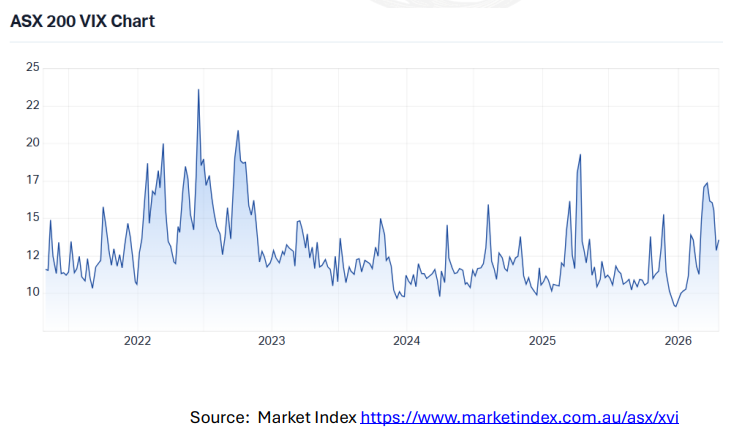
This Gyrostat Market Outlook examines how risk is currently priced in equity markets, rather than attempting to forecast direction. Recent conditions have seen a decline in implied volatility and a corresponding reduction in the cost of downside protection, despite ongoing structural uncertainties.