Retirement Portfolio Resilience Perspective
Primary Pillar: Retirement Portfolio Construction
Supporting Pillars: Sequencing Risk Awareness • Risk Pricing Discipline
This educational article examines how changing market conditions can affect retirement outcomes and explains why retirement portfolios should be constructed to remain resilient across a wide range of future environments.
Viewed through today's Retirement Portfolio Resilience Framework, the enduring principle is that retirement portfolio construction should reduce dependence on favourable market conditions by combining long-term growth assets with complementary protection strategies that help address sequencing risk. While the publication reflects the investment environment and terminology of its time, it represents one of the earliest public expressions of the philosophy that ultimately evolved into Retirement Portfolio Resilience.
This educational article forms part of Gyrostat's historical research archive documenting the evolution of the Retirement Portfolio Resilience Framework.
Protecting and growing retiree’s wealth when market conditions change
History of changing investment paradigms
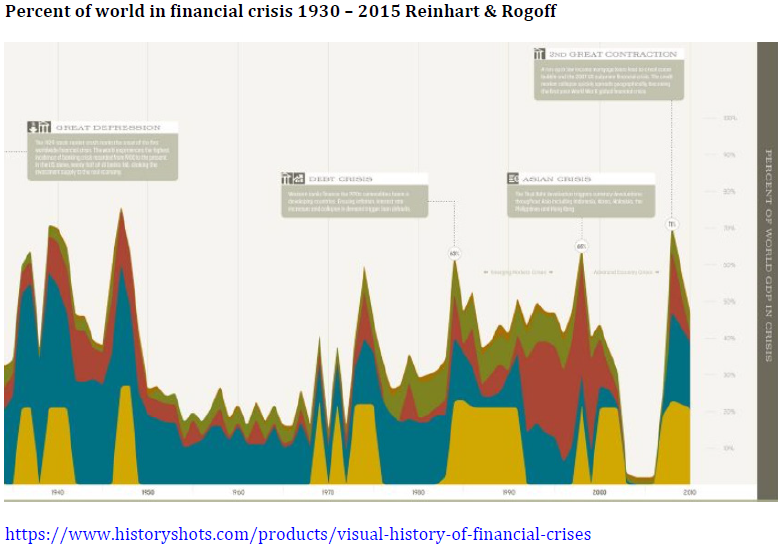
Investment cycles rotate between calm and volatile conditions. Historically the transition from calm to volatile conditions has seen financial crisis and large wealth destruction.
The current investment paradigms are:
1) Geopolitical: Markets can cope with change.
2) Macroeconomic: Slow and stable growth.
3) Central Banks can control volatility
4) Valuations are historically ‘high’ but can be supported in a low interest rate with stability
These paradigms are prone to change through time. Geopolitical and macroeconomic policy changes are often a precursor to changing economic conditions. Stock market valuations are prone to large corrections with recession and debt defaults.
There is increasing commentary on household debt threatening financial stability in Australia, and of a Government in political gridlock.